Blood Panels

LDL Particle Size

LDL Particle Size

Last Updated

Jun 10, 2026

Table of contents

For a long time the cholesterol story has been simple: good versus bad. But that is like judging a car by its fuel gauge. A far more revealing measure of cardiovascular risk is the size and number of your LDL particles. Whether they are big and fluffy or small and dense tells you more about your heart than your total cholesterol number ever could.

Picture your bloodstream as a highway. A standard cholesterol test measures the total weight of the cargo. It says nothing about the trucks carrying it, how many there are, how big they are, or how likely they are to cause a pileup. Advanced lipid testing counts those trucks and measures their size, and it turns out not all LDL particles are created equal.

Why size matters

The risk hiding behind a normal number.

2-3x
Higher coronary artery disease risk with mostly small, dense LDL (Pattern B)
50-70%
Increased heart attack risk independently linked to small dense particles
25.5nm
The size below which particles count as the high-risk Pattern B, per the MESA study
1
ApoB molecule per atherogenic particle, so ApoB is a direct headcount

Two kinds of LDL

Beach balls and marbles.

LDL particles fall into two camps, and the difference between them is the difference between a quiet artery and a clogged one.

Pattern A · lower risk
Large, buoyant LDL

Big, slow-moving particles. Like beach balls, they are too large to push through the artery lining, so they bounce off and cruise on without causing much trouble.

Pattern B · higher risk
Small, dense LDL

Small, aggressive particles. Like marbles, they slip through the gaps in the artery lining, get stuck, oxidize, and kick off the inflammation that becomes plaque.

BLOODSTREAM ARTERY WALL bounces off Pattern A plaque Pattern B slips through
Large, buoyant LDL (Pattern A) Small, dense LDL (Pattern B)
The dangerous part: you can have a totally normal LDL-C while carrying a high number of these small particles, which means real risk you never see on a standard test. Studies link a Pattern B profile to 2 to 3 times the risk of coronary artery disease.

The mechanism

How small particles damage arteries.

The threat comes down to three things: their size, how long they linger, and the inflammation they spark.

1
They slip through

Your artery lining, the endothelium, is a single-cell net built to keep large things out. Big particles bounce off. Small, dense ones are small enough to slip through the gaps into the wall beneath, the first step toward plaque.

2
They linger and oxidize

Small particles hang around in the bloodstream far longer than large ones. The longer they circulate, the more likely they are to oxidize, a kind of biological rusting that turns a simple fat transporter into a toxic, inflammatory irritant.

3
They inflame and build plaque

Your immune system attacks the oxidized particles, but the response backfires. Chronic inflammation damages the wall, attracts more immune cells, traps more particles, and the vicious cycle hardens into atherosclerosis, raising heart attack and stroke risk.

Counting trucks, not cargo

Standard panel vs advanced panel.

A standard panel estimates the cholesterol inside your LDL. An advanced panel counts the particles themselves, with LDL particle number (LDL-P, via NMR) and ApoB, the single most accurate count of plaque-causing particles.

What it tells youStandard (LDL-C)Advanced (LDL-P / ApoB)
What it measuresEstimated cholesterol carried by LDLThe actual number of LDL particles
AnalogyTotal cargo in a fleet of trucksThe number of trucks on the road
AccuracyCan mislead, ignores size and densityDirect measure of atherogenic burden
Risk predictionModerate predictorMuch stronger, more reliable predictor

The blind spot

Discordance: same LDL-C, opposite risk.

Two people can have an identical LDL-C of 100 mg/dL and a completely different real risk. This mismatch is called discordance, and it is exactly what standard panels miss.

Lower risk
Person A

A small number of large, fluffy particles, each packed with cholesterol. Few trucks, heavy loads. Their actual risk is relatively low.

High risk
Person B

A huge number of small, dense particles, each carrying little cholesterol. Tons of trucks, light loads. Same LDL-C, sky-high risk.

A real scenario: your LDL-C reads 95 mg/dL and everyone relaxes. Then the advanced report shows an LDL-P of 1,600 nmol/L, which screams high risk. The standard test only weighed the cholesterol inside, so it missed the army of particles bombarding your arteries. This is why counting particles is non-negotiable.

Your targets

What to aim for.

Lower is better for both markers. Your clinician personalizes the goals, but these are the widely accepted ranges for the numbers that actually predict risk.

ApoB (mg/dL)Optimal under 80. High risk above 120.
Optimal
Borderline
High risk
under 80
80 to 120
over 120
LDL-P (nmol/L)Optimal under 1000. High risk above 1600.
Optimal
Borderline
High risk
under 1000
1000 to 1600
over 1600

Take control

How to shift your particles bigger.

Moving from a hazardous fleet of small, dense particles to safer large, fluffy ones is within your control. The real villain is not dietary fat, it is sugar and refined carbs, which your liver converts into the triglycerides that fuel small-particle production.

Cut sugar and refined carbs
The single biggest lever. White bread, pastries, and sugary drinks drive triglycerides and small particles.
Add soluble fiber
Oats, barley, apples, and beans act like a sponge that escorts cholesterol out of the gut.
Embrace healthy fats
Monounsaturated fats from olive oil, avocado, and nuts improve lipids without harming particle size.
Prioritize quality protein
Lean protein keeps you full, which curbs the mindless refined-carb snacking that makes small particles.
Move consistently
Cardio and strength both improve insulin sensitivity and triglycerides, nudging particles larger.
Sleep, stress, weight
The foundation. Poor sleep and chronic stress fuel inflammation and insulin resistance, undoing the rest.

Your questions, answered

LDL particles, demystified.

Can I have normal LDL cholesterol but still be at risk?

Yes, and this is the single most important takeaway. You can have a normal or even low LDL-C on a standard test while carrying a dangerously high number of small, dense particles. This discordance is a major blind spot, and the only way to know is an advanced test measuring LDL-P or ApoB.

Is a high LDL-P dangerous?

Yes. A high LDL particle number means a large army of particles capable of breaching the artery wall, independent of how much cholesterol each one carries. It is a stronger, more reliable predictor of cardiovascular risk than LDL-C, which is why a high LDL-P matters even when your standard cholesterol looks fine.

Can diet actually change my LDL particle size?

Without a doubt. Diet is your most powerful lever. The most effective move is cutting sugar and refined carbohydrates, which shifts particles from the small, dense, dangerous type toward the large, fluffy, safer type. Whole, real foods give you direct control.

How often should I test LDL particle size?

Start with a baseline advanced lipid panel to see where you stand. If results are not ideal, retest about 3 to 6 months after meaningful diet and lifestyle changes to confirm the strategy is working. Once stable and in a healthy range, an annual check is usually enough. Always set the schedule with your doctor.

Trade guesswork for data

See the full story your cholesterol number hides.

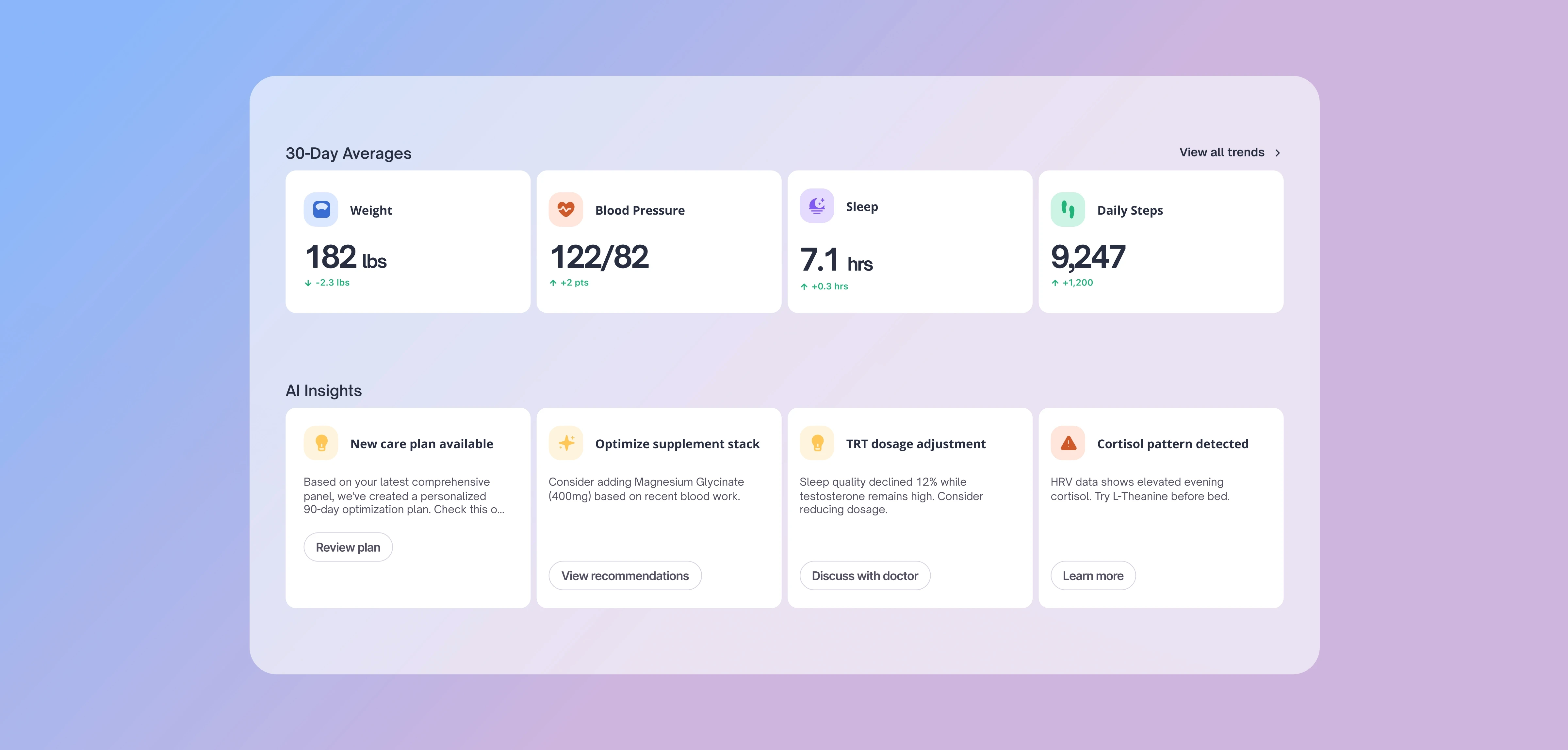
OneTwenty syncs advanced data like LDL particle testing with the real-time signals from your wearables, so you see the complete picture of your metabolic health and watch your numbers respond to your choices. OneTwenty launches in June 2026. Join the waitlist to claim your spot.

Join the beta

Advanced lipids · wearable integration · quarterly trends · $499/yr

This article is educational and is not medical advice. Lipid testing, target ranges, and treatment decisions should be guided by a licensed clinician based on your full risk profile.
How OneTwenty Works

How OneTwenty Works

Sign Up - Schedule Initial Labs

Get started with comprehensive lab work, done from any Quest location or at-home phlebotomy appointment add on.

Buy or Connect Your Wearable of Choice

Connect your own wearable device for seamless health monitoring.

Buy Your Scale and Blood Pressure Monitor

Complete body and cardiovascular composition analysis and tracking.

Get Your Action Plan

Receive personalized recommendations based on your health data.

Track in Real Time

+ Get Adjusted

Continuous monitoring with real-time adjustments to your health plan.

Sign Up - Schedule Initial Labs

Get started with comprehensive lab work, done from any Quest location or at-home phlebotomy appointment add on.

Buy or Connect Your Wearable of Choice

Connect your own wearable device for seamless health monitoring.

Buy Your Scale and Blood Pressure Monitor

Complete body and cardiovascular composition analysis and tracking.

Get Your Action Plan

Receive personalized recommendations based on your health data.

Track in Real Time

+ Get Adjusted

Continuous monitoring with real-time adjustments to your health plan.

Sign Up - Schedule Initial Labs

Get started with comprehensive lab work, done from any Quest location or at-home phlebotomy appointment add on.

Buy or Connect Your Wearable of Choice

Connect your own wearable device for seamless health monitoring.

Buy Your Scale and Blood Pressure Monitor

Complete body and cardiovascular composition analysis and tracking.

Get Your Action Plan

Receive personalized recommendations based on your health data.

Track in Real Time

+ Get Adjusted

Continuous monitoring with real-time adjustments to your health plan.

Lifelong Optimization

Not your average
Checkup

Every life stage brings new biological demands. Tracking the right metrics at the right time helps you adapt, optimize performance, and extend both lifespan and healthspan.

Traditional

Manual Data Processing

Guesswork Trend Detection

Slow Campaign Setup

Multiple Tools, Multiple Logins

Reactive Decision-Making

Manual Reporting

Delayed Results

High Error Risk

Automated Data Sync

Real-Time Trend Insights

Instant AI Optimization

All-in-One Platform

Proactive AI-Driven Strategies

Auto-Generated Reports

Instant Performance Updates

AI Precision

Lifelong Optimization

Join The

Closed Beta

We are currently in closed beta with limited capacity.

Open Beta · Launching June

HSA/FSA Approved

50% off for Founding Members

Hey Nick,

Your Quarterly Review

ApoB Density +12% → Elevated cardiovascular risk

Resting HR +6 bpm → Possible overtraining or stress

Sleep Time -42 min → Reduced nightly recovery

BMI Shift -1.8% → Healthy weight improvement

HRV Recovery +22ms → Stronger stress resilience

→ Suggesting root cause (AI Coming soon)

Lifelong Optimization

Join The

Closed Beta

We are currently in closed beta with limited capacity.

First Closed Beta Full
·
Accepting Reservations for Second Cohort

HSA/FSA Approved

50% off for Founding Members

Hey Nick,

Your Quarterly Review

ApoB Density +12% → Elevated cardiovascular risk

Resting HR +6 bpm → Possible overtraining or stress

Sleep Time -42 min → Reduced nightly recovery

BMI Shift -1.8% → Healthy weight improvement

HRV Recovery +22ms → Stronger stress resilience

→ Suggesting root cause (AI Coming soon)

Frequently Asked Questions

Clarity before

you commit

Answers on setup, scale, and support to remove blockers.

What’s included in the membership?

Do you accept HSA and FSA?

Do I have to take medications?

Is OneTwenty available in my state/country?

Is my health data secure? (HIPAA Standards)

Do you treat medical conditions?

Why can't I use my insurance for these labs?

Y

ur

Data

Your

D

e

ices

Your

Longevity

OneTwenty

Live guidance for sleep, hormones, and weight powered by your wearables, smart devices and blood work

Important Details:

*Up to 165 lab data points per year. Exact number varies based on your baseline results and which biomarkers your physician retests each quarter.

**Due to state-specific lab draw requirements in New York and New Jersey, testing is conducted twice per year instead of quarterly. Pricing reflects the higher cost of at-home phlebotomy in these states.


Disclaimer:

OneTwenty is a health technology company. We are not a medical provider, laboratory, or pharmacy. We provide data and tools to help you make informed decisions about your own health and better understand your biological needs.

All clinical services, including lab testing, telehealth consultations, and prescription fulfillment, are provided exclusively by independent, licensed third parties.


OneTwenty facilitates secure communication between you and these providers. OneTwenty does not prescribe medications, provide diagnoses, or offer medical treatment. While we provide personalized insights and protocols, these are not a substitute for professional medical advice.

Always consult your primary care physician before making changes to your health regimen. OneTwenty does not replace your relationship with your physician.

Y

ur

Data

Your

D

e

ices

Your

Longevity

OneTwenty

Live guidance for sleep, hormones, and weight powered by your wearables, smart devices and blood work

Important Details:

*Up to 165 lab data points per year. Exact number varies based on your baseline results and which biomarkers your physician retests each quarter.

**Due to state-specific lab draw requirements in New York and New Jersey, testing is conducted twice per year instead of quarterly. Pricing reflects the higher cost of at-home phlebotomy in these states.


Disclaimer:

OneTwenty is a health technology company. We are not a medical provider, laboratory, or pharmacy. We provide data and tools to help you make informed decisions about your own health and better understand your biological needs.

All clinical services, including lab testing, telehealth consultations, and prescription fulfillment, are provided exclusively by independent, licensed third parties.


OneTwenty facilitates secure communication between you and these providers. OneTwenty does not prescribe medications, provide diagnoses, or offer medical treatment. While we provide personalized insights and protocols, these are not a substitute for professional medical advice.

Always consult your primary care physician before making changes to your health regimen. OneTwenty does not replace your relationship with your physician.

Y

ur

Data

Your

D

e

ices

Your

Longevity

OUTLIVE.

Live guidance for sleep, hormones, and weight powered by your wearables, smart devices and blood work

Important Details:

*Up to 165 lab data points per year. Exact number varies based on your baseline results and which biomarkers your physician retests each quarter.

**Due to state-specific lab draw requirements in New York and New Jersey, testing is conducted twice per year instead of quarterly. Pricing reflects the higher cost of at-home phlebotomy in these states.


Disclaimer:

OneTwenty is a health technology company. We are not a medical provider, laboratory, or pharmacy. We provide data and tools to help you make informed decisions about your own health and better understand your biological needs.

All clinical services, including lab testing, telehealth consultations, and prescription fulfillment, are provided exclusively by independent, licensed third parties.


OneTwenty facilitates secure communication between you and these providers. OneTwenty does not prescribe medications, provide diagnoses, or offer medical treatment. While we provide personalized insights and protocols, these are not a substitute for professional medical advice.

Always consult your primary care physician before making changes to your health regimen. OneTwenty does not replace your relationship with your physician.

Stop Guessing Your Health

Live guidance for sleep, hormones, and weight powered by your wearables, devices + blood work.

Join Beta

Join Beta Waitlist

Stop Guessing Your Health

Live guidance for sleep, hormones, and weight powered by your wearables, devices + blood work.

Join Beta

Join Beta Waitlist